The underground sanitary sewer lateral is among the most vulnerable components of older Montclair properties. Residential construction dating from the late nineteenth through mid-twentieth century relied heavily on vitrified clay tile pipe outside the building and heavy bell-and-spigot cast iron beneath basement slabs. Over decades, expansive tree root networks, soil settling, and acidic waste water break down joint packing. Wastewater can seep silently beneath foundation footings or through cellar walls long before a complete drain blockage occurs. With non-invasive leak detection in Montclair, our high-definition camera technology inspects your drainage network without cutting into walls or digging up floors.
Warning Signs of a Failing Underground Sewer Line
Sewer lateral leaks rarely remain isolated; they create secondary sanitation issues and structural moisture problems:
- Recurring Slow Drains and Gurgling Fixtures: Toilets bubbling or basement utility sinks draining sluggishly when washing machines empty.
- Persistent Sewer Gas Odors: Unpleasant hydrogen sulfide odors lingering in basements, crawl spaces, or outside near foundation flowerbeds.
- Wet Stains on Basement Foundation Walls: Wastewater weeping through lower fieldstone or block mortar lines, often mistaken for clean groundwater seepage.
- Lawn Sinkholes or Unusually Lush Turf: Localized depressions or saturated soil patches along the sewer lateral easement between the home and street.
- Rodent or Insect Activity Near Sump Pits: Pests drawn to subterranean drain breaches beneath concrete floor slabs.
Local Montclair Housing and Tree Canopy Factors
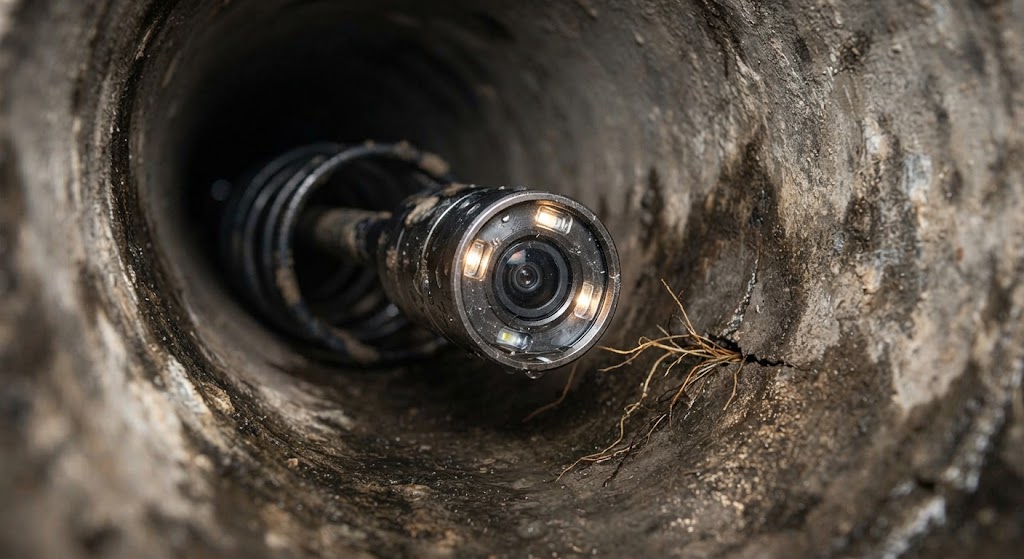
Montclair's renowned urban forest—featuring mature red oaks, Norway maples, and weeping willows—creates intense subterranean competition for moisture. In older neighborhoods like Watchung Plaza, the Walnut Street corridor, and Upper Montclair, tree roots seek out the porous mortar joints of vitrified clay sewer pipes. As roots expand, they act as wedges, creating cracked sewer pipe Montclair NJ homeowners discover only after wastewater backs up.
Additionally, cast-iron plumbing beneath early-1900s basements frequently suffers from channel rot along the bottom invert, allowing wastewater to seep continuously into sub-slab gravel without triggering a total drain stoppage.
Noticing Sewer Smells or Slow Drains in Montclair?
Do not wait for wastewater to back up into your finished basement. Call our diagnostic specialists to inspect your lateral.
Step-by-Step Diagnostic Protocol for Sewer Lines
Our non-destructive diagnostic approach reveals the condition of underground sanitary pipes with total clarity:
- Cleanout Access & Line Preparation: We access the sanitary system via existing basement cleanouts or exterior vent stacks, ensuring no invasive disruption to finished living areas.
- High-Definition Sewer Camera Inspection Montclair Protocol: A self-leveling color video camera equipped with high-intensity LED optics is guided through the lateral. High-resolution monitors record pipe condition, measuring distance down to the inch.
- Electromagnetic Sonde Depth Mapping: A radio transmitter integrated into the camera head transmits a continuous frequency to our surface receiver, pinpointing the exact location and subterranean depth of cracks or blockages.
- Vapor Smoke Testing (When Indicated): Non-toxic diagnostic smoke is introduced under low pressure into the drainage network to trace elusive sewer gas leaks behind finished walls and roof vents.
What Happens After the Leak Is Found: Lining vs. Excavation
Once our inspection identifies the structural fault, property owners can choose the most appropriate sewer line leak repair Montclair solution:
Cured-in-Place Pipe (CIPP) Lining: In many cases, fractured clay or pitted cast-iron laterals can be repaired using trenchless epoxy lining. An epoxy-soaked fabric tube is inverted into the existing pipe and cured in place, creating a seamless, joint-free structural liner that seals all cracks and prevents root intrusion for decades.
Targeted Spot Repair: If damage is localized to an isolated root rupture or fitting shear, our exact surface marking allows a licensed plumber to excavate a small pit directly over the fault. In New Jersey, physical plumbing and drainage modifications require a NJ licensed master plumber . Always call NJ One Call (811) before any excavation. For parallel domestic service line checks, see our water line leak detection service.
Cost Factors in Sewer Line Inspection & Diagnostics
The scope of sewer lateral diagnostics depends on property-specific plumbing configurations:
- Availability of Cleanout Access: Accessible main cleanouts allow rapid camera insertion, whereas systems lacking accessible cleanouts may require pulling a basement toilet to gain entry.
- Length of the Drainage Run: Setbacks in Upper Montclair with 100-plus-foot distances to the street main require extended push-cable inspection.
- Extent of Debris & Scale: Heavy grease buildup or tree root clusters may require light hydro-jet clearing to provide unobstructed optical clarity for diagnostic imaging.
- Depth of the Lateral: Deep sewer runs buried eight to twelve feet beneath the surface require high-gain electromagnetic sonde receivers for surface locating.
Sewer System Maintenance and Prevention Tips
Protecting aging drainage infrastructure from costly sewer backups requires straightforward preventive steps:
- Never dispose of grease, fats, fibrous cooking scraps, or sanitary wipes down drains or toilets.
- Schedule a video camera inspection every three to five years if your property has mature trees near the sewer lateral.
- Ensure all basement floor drains maintain water in their P-traps; pour a pitcher of water into unused drains monthly to keep sewer gas seals intact.
- Consider installing a backwater prevention valve if your basement plumbing fixtures are situated below street sewer manhole elevations.
When Is a Sewer Leak an Emergency?
A slow-draining fixture can be addressed during normal scheduling, but an active raw sewage backup into finished living spaces presents immediate biological and structural hazards. If wastewater is overflowing floor drains or backing up into bathtubs, cease running all household water immediately and consult our emergency leak repair procedures.
Montclair Neighborhoods with High Sewer Lateral Vulnerability
Sewer lateral issues are common across Montclair's historic neighborhoods. Along the mature tree-lined streets of Upper Montclair and near Brookdale Park, extensive oak root systems frequently breach clay tile pipes. In older sections of Montclair Center and the South End, original cast-iron laterals installed beneath basement concrete slabs often suffer bottom channel wear that allows wastewater to seep silently into surrounding soil.
Frequently Asked Questions About Sewer Line Diagnostics
How does a high-definition sewer camera detect hidden cracks and line breaches?
A self-leveling HD optical camera mounted on a flexible push rod travels through the drain from a cleanout. It transmits real-time video to a diagnostic monitor, recording pipe scale, root intrusions, hairline cracks, and misaligned bell joints with exact distance and depth telemetry.
What causes persistent sewer gas odors inside a Montclair basement?
Sewer odors typically originate from dried plumbing trap seals, cracked vertical cast-iron vent stacks inside wall cavities, or broken sub-slab drain connections where sewer gases escape into foundation gravel.
How is trenchless pipe lining compared to traditional sewer excavation?
Cured-in-place pipe (CIPP) lining inserts an epoxy-saturated sleeve inside the existing damaged pipe, hardening into a seamless structural barrier without excavating lawns or driveways. Traditional excavation is necessary only when the lateral has fully collapsed or has severe back-pitch.
Can tree roots cause cracks in underground sewer lines?
Yes. Mature tree roots seek subterranean warmth and moisture, penetrating microscopic fissures or clay tile hub joints. As roots expand, they exert hydraulic force that splits clay and cast-iron lateral pipes.
Schedule a Video Sewer Camera Inspection Today
Pinpoint cracks, root intrusions, and hidden leaks accurately. Call our diagnostic specialists now.