In Montclair's stately homes, second- and third-floor bathrooms often feature intricate vintage subway tile, heavy cast-iron clawfoot tubs, and historic marble floor assemblies. When a water ring appears on a first-floor ceiling or plaster begins to blister in a downstairs hallway, locating the exact moisture source is crucial. Demolishing custom tile or tearing out decorative plaster without confirming the failure mechanism causes needless expense. With non-invasive leak detection in Montclair, our diagnostic protocol isolates whether moisture originates from pressurized supply lines, leaking shower pans, tub drain shoes, or surface grout failures.
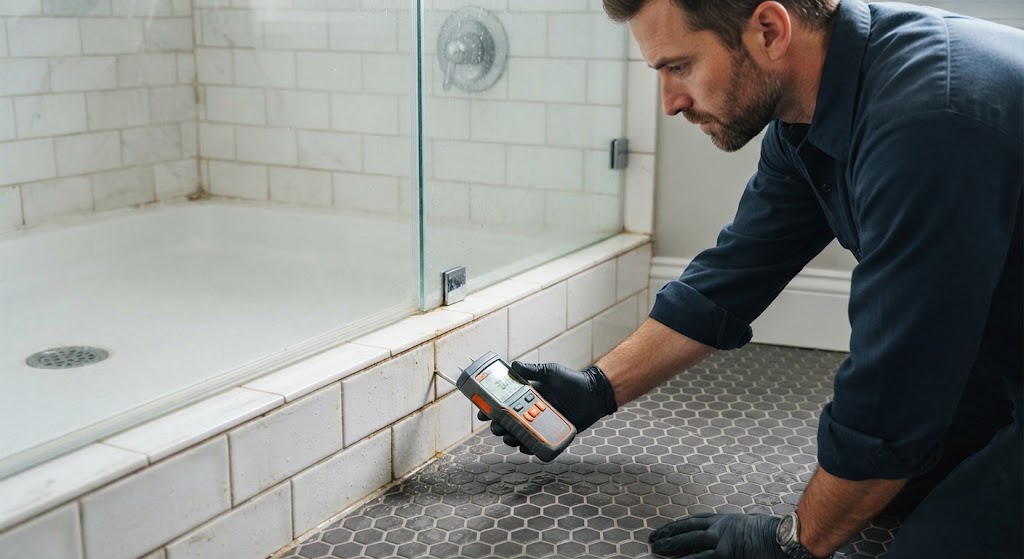
Warning Signs of Concealed Bathroom Plumbing Leaks
Bathroom water leaks often develop quietly within subfloor assemblies before becoming visible on main living levels:
- Discolored Ceilings Beneath Upper Baths: Circular water rings, sagging drywall, or peeling paint directly under a shower, bathtub, or toilet installation.
- Loose or Spongy Floor Tiles: Ceramic or marble tiles shifting underfoot due to water saturation breaking down thin-set mortar and wood subflooring.
- Musty Odors and Mildew Behind Vanities: Lingering damp odors behind baseboards, bathroom cabinetry, or medicine cabinets.
- Persistent Mold Along Baseboards and Door Frames: Mold growth at the intersection of bathroom floors and drywall partitions.
- Unstable or Rocking Toilet Base: Movement indicating that moisture from a failed wax ring has weakened the wood subfloor around the closet flange.
Local Montclair Housing and Architecture Factors
The historic homes found throughout Upper Montclair and Watchung Plaza often retain original lead or copper shower pans embedded in thick mud-bed mortar. Over several decades of building settlement and thermal cycling, these vintage metal pans develop fatigue cracks near the drain throat, causing a slow shower pan leak Montclair homeowners might only notice after lower-level ceilings discolor.
Furthermore, remodeled bathrooms frequently feature modern thermostatic shower valves joined to older copper risers. Vibrations from high water pressure can loosen internal valve cartridge packings, causing water to drip behind tiled wet walls every time the shower runs.
Water Stains Under an Upper-Floor Bathroom?
Don't tear out expensive custom tile blindly. Let us test your shower pan, valves, and drains first.
Step-by-Step Bathroom Diagnostic Protocol
Our rigorous systematic testing method isolates bathroom moisture sources without destructive tearing:
- Visual & Surface Inspection: We examine perimeter caulking, tile grout lines, fixture escutcheons, and tub surround joints for visible cracking and separation.
- Shower Pan Isolation Flood Testing: We insert an inflatable pneumatic test plug directly into the shower drain throat and fill the pan with water up to the curb. If water levels drop and sub-slab moisture rises without running the shower valve, the shower pan or drain clamping ring is compromised.
- Pressurized Valve & Diverter Stress Testing: We isolate and pressurize the shower valve, diverter, and shower arm connection behind the tile wall, using acoustic contact probes to detect hissing or dripping inside the wall cavity.
- Drain Waste & Overflow (W&O) Testing: We test tub drain shoes and overflow gaskets using dye testing and camera inspection to identify leaking tub drain Montclair issues.
- Infrared Thermal Mapping: Thermal cameras view the ceiling below while testing fixtures, capturing temperature differentials in real time as moisture travels through joist bays.
Grout and Caulk Issues vs. Active Pipe Leaks
A common dilemma for homeowners is distinguishing between superficial tile maintenance issues and serious pipe failures. During bathroom leak detection Montclair inspections, we clearly identify whether water migration is due to failed perimeter caulk or a pressurized pipe failure.
Tile grout is naturally porous and relies on a sound underlying waterproof membrane or pan liner. When hairline grout cracks coincide with a torn waterproof pan, surface splash water penetrates into structural framing. If our diagnostics confirm the supply piping and drains are watertight, the issue can often be resolved through professional regrouting, cleaning, and elastomeric silicone re-caulking, avoiding complete bathroom demolition.
What Happens After Detection: Repair Options
Once our diagnostic inspection isolates the exact failure point, homeowners can proceed with clear, targeted repair plans:
If the failure is an isolated valve cartridge or shower riser fitting, a licensed plumber can open a minimal access panel from the reverse side of the wall—often inside a bedroom closet or hallway—without damaging bathroom tile. If the issue is a leaking tub drain shoe or toilet wax seal, simple component replacement restores water tightness. For deeper piping issues, see our hidden water leak detection and pipe leak repair services. In New Jersey, plumbing work requires a licensed master plumber .
Cost Factors in Bathroom Leak Diagnostics
Diagnostic investment depends on fixture complexity and accessibility:
- Number of Fixtures in the Room: Multi-head shower systems with body sprays, handheld wands, and separate soaking tubs require more testing cycles than a standard single-valve shower.
- Access to Lower-Level Ceilings: Open unfinished basement spaces below first-floor baths allow direct line-of-sight thermal imaging, whereas finished decorative plaster ceilings below upper-floor baths require sensitive acoustic and moisture mapping.
- Tile and Material Composition: Natural stone installations, such as marble or slate, retain moisture differently than ceramic tile and require calibrated moisture meters.
- Drain Assembly Access: Tub drain assemblies enclosed without rear access panels require targeted diagnostic scopes to inspect drain shoes and waste arms.
Bathroom Moisture Prevention Tips
Keep your Montclair bathrooms watertight with routine preventive maintenance:
- Inspect and renew 100% silicone sealant along shower curbs, tub rims, and vertical corner seams annually.
- Check toilet bases for any wobbling or rocking; reseat loose toilets promptly with a new wax ring and reinforced brass closet bolts.
- Clean hair and soap residue from shower drains regularly to prevent standing water from placing hydrostatic pressure on pan seams.
- Run bathroom ventilation fans during showers and for twenty minutes afterward to minimize ambient moisture saturation on ceiling drywall.
When Is a Bathroom Leak an Emergency?
While slow shower pan weeping can be scheduled for routine diagnostic evaluation, active water flowing through a ceiling light fixture or a toilet supply line that will not shut off represents an immediate hazard. If water is dripping through electrical fixtures or ceiling plaster is noticeably sagging, shut off the bathroom isolation valve or the home's main water supply immediately, cut electricity to the wet zone, and review our emergency leak repair procedures.
Montclair Neighborhoods with High Bathroom Leak Incidence
Bathroom plumbing leaks are frequently diagnosed in multi-story residences across Montclair. In Upper Montclair and near the Montclair Art Museum, expansive three-story homes often feature original second- and third-floor bathrooms where aging mortar-bed shower pans have reached the end of their operational lifespan. In the vibrant Walnut Street district and South End, vintage bathroom fixtures and clawfoot tubs often experience drain shoe vibration fatigue that leads to hidden ceiling water stains below.
Frequently Asked Questions About Bathroom Leak Diagnostics
How can you tell if a bathroom leak is caused by shower pan failure or cracked supply pipes?
We perform isolation flood testing on the shower pan using mechanical test plugs, completely isolating the drain and tile basin without running water through the supply pipes. If moisture levels spike beneath the floor, the shower pan or drain assembly is breached. If moisture only appears when pressurized valves are opened, the failure lies within the supply plumbing.
Why do stains appear on the dining room ceiling below second-floor bathrooms?
Water penetrates through failed tile grout, worn wax rings, or bathtub overflow gaskets, traveling along structural joists before pooling on the plaster or drywall below. Moisture mapping accurately traces the path back to the exact fixture source.
Can deteriorated tile grout and silicone caulk cause structural floor damage?
Yes. While grout is not waterproof on its own, cracked seams and separated perimeter caulk allow splash water to penetrate the subfloor mortar bed, rotting wood subflooring and degrading framing joists over time.
What are the common symptoms of a failing toilet wax ring seal?
A rocking toilet bowl, darkened grout surrounding the fixture base, persistent sewer odors, or ceiling discoloration directly beneath the toilet flange indicate a compromised wax seal requiring immediate replacement.
Pinpoint Your Shower or Bathroom Leak Today
Protect your home from hidden water damage. Call our diagnostic specialists now to isolate the leak.